
Animatronic Animals Find Applications Across Entertainment, Education, and Commercial Settings
Oct 24, 2026
Zigong, Sichuan Oct 23, 2026 (Issuewire.com) - An animatronic animal looks like an animal and behaves like one, but none of it is alive. A steel frame is welded, motors and a control program are fitted, the body is carved in high-density foam, and the surface is finished in simulated fur or skin before the colour goes on. That build is the whole answer to the question in the title. These models are useful wherever a real animal cannot be used because of climate, safety, cost, conservation rules, or because the species has been extinct for ten thousand years.
Below are the six places these models earn their keep. Five are the conventional venues. The sixth is where most of the recent growth is. If you would rather start from the product side, the whole range sits in one place under animatronic animals.
The Six Venues at a Glance
Animatronic animals are used in zoos, museums, theme parks, shopping centres, children's playgrounds, aquariums, festivals, and film productions. Each venue has different requirements for materials, movement, installation, and maintenance.
In zoos, fur-covered mammals or silicone models of wet and smooth-skinned species are suitable choices. Realistic proportions and surface textures help the models fit into animal exhibits. In museums, animatronic animals allow visitors to observe extinct and prehistoric species at full size. Anatomical accuracy and reliable operation during long opening hours are essential considerations.
In theme parks, animatronic animals serve as roaming characters, parade attractions, ride-on walking models, and lagoon installations. These applications require repeatable movements, dependable operation, and convenient maintenance access. In shopping centres, moving animal models can encourage visitors to stop, take photographs, and spend more time in a designated area. Installation planning must account for headroom, floor loading, emergency exits, sound levels, and power supplies.
In children's playgrounds, animatronic animals provide interactive attractions that children can approach closely. Suitable designs should consider reachable height, slow movement, concealed mechanisms, and appropriate sound levels. Aquariums, festivals, and film productions use animatronic models to represent species and create scenes that would be impractical with live animals. Waterproofing, modular construction, weather-resistant coatings, and transportation requirements may all influence the final specification.
Application in Zoos
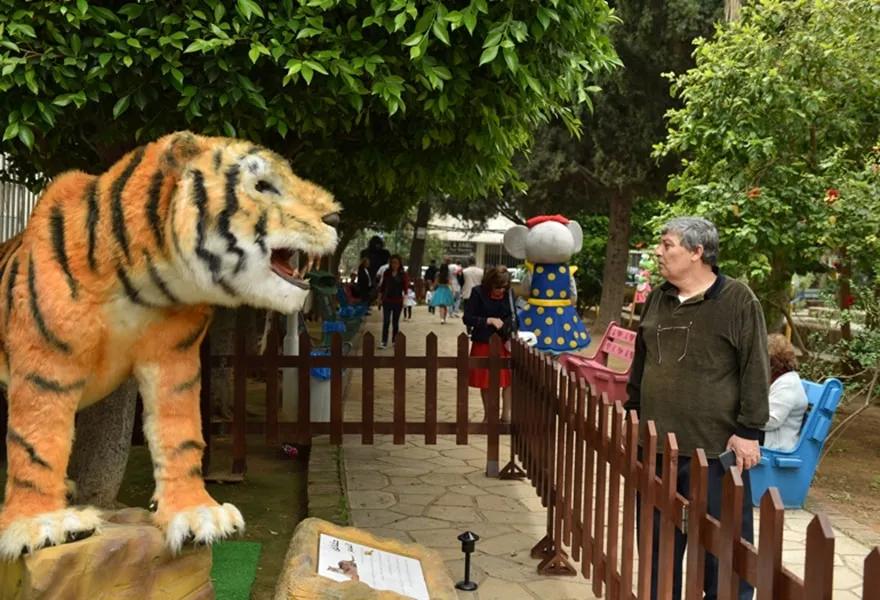
The main constraint on a zoo is not visitor interest but animal husbandry. Whether a collection can accommodate a species depends on climate, enclosure space, veterinary support, and licensing. These limitations do not apply in the same way to animatronic models. Zoos can use them to represent species that cannot live comfortably in the local climate, such as yaks or pandas in hot countries, and to show animals that are active mainly at night.
Fur-covered models are particularly suitable for mammal displays because realistic surface textures help avoid the artificial appearance of plastic. Examples include a fur-covered yak and a realistic panda designed for zoo and museum exhibitions.
Animatronic models should support a live animal collection rather than replace it. Visitors may respond negatively if a zoo appears to substitute robots for real animals. The most effective applications focus on interpretation, including species that cannot be kept, behaviours that are difficult to observe, and animals that visitors cannot safely approach.
Application in Museums
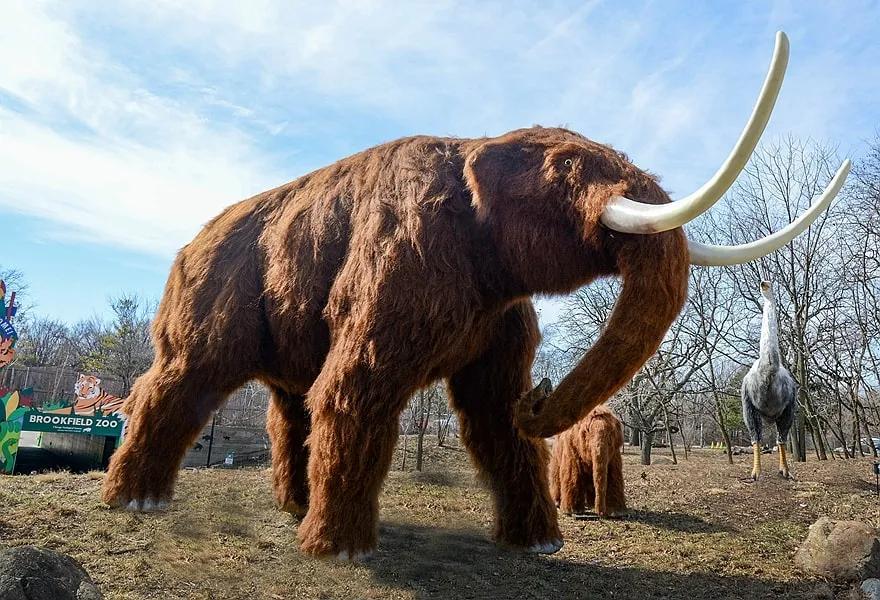
Museums use animatronic animals to exhibit species that cannot be displayed alive and to demonstrate their size and behaviour. A full-size woolly mammoth can communicate information that a skeleton alone cannot provide, particularly when movement and sound help explain how the animal may have behaved.
Museum projects require close cooperation between manufacturers and curatorial teams. Anatomical proportions, eye depth, skin or fur texture, and movement sequences should be reviewed against reference materials before production begins. Smaller exhibits, such as a museum-grade lizard, can also support specific educational messages without occupying excessive space.
Another important consideration is operational reliability. Museums that open seven days a week need models capable of repeated daily operation. Drive systems, ventilation, maintenance access, and service requirements therefore deserve as much attention as the external appearance.
Application in Theme Parks
Animatronic animals serve several distinct functions in theme parks, and each application requires a different specification.
Photo landmarks are large, static, or slowly moving installations that establish the visual identity of a themed area. Their size and surface finish are generally more important than complex movements.
Roaming and parade characters move along designated routes while surrounded by visitors. Examples include a walking Giganotosaurus and a Falkor luck-dragon. These models require defined routes, trained handlers, and suitable battery arrangements.
Ride-on walking models represent a separate product category because they carry passengers. A ride-on walking turtle illustrates this application. Loading procedures, supervision, and a suitable route surface must be considered during planning.
Water features use animatronic animals in lagoons and pools where live animals would require additional filtration, feeding, and animal-welfare arrangements.
For theme parks, operational uptime is a critical specification. Buyers should understand how a model performs during continuous daily operation and where its maintenance panels are located, as these factors influence long-term maintenance costs.
Application in Shopping Centres
Shopping centres often install animatronic animals to increase visitor engagement and encourage photography. A moving animal gives shoppers a reason to stop and take pictures. These activities can extend the time visitors spend in the building, while photographs shared online can continue attracting attention after the installation has been removed.
The commercial objective should be established before selecting a model. If photography is the primary goal, visual appeal and camera-friendly positioning may be more valuable than a complex movement system.
Five practical constraints determine whether an indoor installation can operate successfully.
Headroom must accommodate the model's highest moving position, not merely its resting height. Lighting rigs and other overhead structures can restrict movement in atriums and shopping malls.
Floor loading is another consideration because large models can concentrate substantial weight on a relatively small base. Upper floors and mezzanines may require assessment by a building engineer.
Emergency egress must remain unobstructed while the model is stationary and throughout its movement cycle. The installation should not interfere with designated escape routes.
Sound levels should suit the building environment. Roaring or other sound effects may travel considerable distances across hard indoor surfaces, affecting nearby tenants and visitors.
Power supply must be planned before the installation position is confirmed. Buyers should identify the nearest suitable power source and determine how electrical connections can be routed safely.
After installation, performance can be assessed by measuring visitor dwell time, the number of people stopping at the display, and the number of social media posts that include the location tag. Setting targets before opening makes the results easier to evaluate.
Application in Children's Playgrounds
Children's playgrounds require a different design approach because visitors interact with animatronic animals at close range. Children may approach the model while parents stand nearby and take photographs, so scale, movement speed, and mechanical safety are especially important.
First, the model's height should suit its intended audience. A model positioned at a child's eye level can be more engaging than a much larger figure viewed from below.
Second, movement should be slow and controlled. Small, deliberate movements can create a convincing animal-like effect without startling children standing nearby.
Third, moving mechanisms should remain inaccessible to visitors. Designs should avoid exposed linkages and accessible pinch points, particularly around hand-level areas. Sound levels should also be appropriate for close interaction.
Smaller models can be effective in family-oriented educational settings. A baby elephant model can attract children's attention while supporting educational displays and interpretation panels for accompanying adults.
Beyond the Usual Five: Aquariums, Festivals, and Film
Animatronic animals also serve applications beyond traditional exhibitions and attractions. Aquariums, ocean parks, festivals, stage productions, and film projects use models to create scenes that may be difficult or impractical to achieve with live animals.
Aquariums and ocean parks use animatronic stingrays and sea turtles in environments where live displays may be impractical. Examples include a realistic animatronic stingray and a lifelike sea turtle model. Waterproofing and material selection are particularly important for these installations.
Festivals and stage shows can accommodate some of the largest animatronic and sculptural animal installations. For the 2025 Xishuangbanna international EDM festival, the project involved one 16-metre elephant head and two 10-metre half-body elephant figures. Production took two months, followed by four days of on-site installation. The structures were divided into transportable modules, with smoke and flame effects prepared at the factory. The installation became a prominent photographic feature of the event. Further information is available in the full project case study and the company's other project cases.
Film and television productions use animatronic models to create realistic animal scenes without requiring live animal handlers or training schedules. A lifelike animatronic horse model is one example. Science centres, resorts, botanical gardens, themed towns, and cinema foyers apply the same principle: a model can provide an experience that a live animal, static sculpture, or screen-based display cannot deliver in the same way.
How to Choose the Right Model for the Venue
Many costly mistakes occur when buyers select an animal before defining the purpose of the installation. Four questions can help establish the main requirements.
The first is whether the model will be used indoors or outdoors. This decision affects the covering materials, protective coatings, and electrical protection needed for the installation.
The second is the model's primary function. A photographic landmark, crowd attraction, educational display, passenger-carrying model, and stage effect each place different demands on size, movement, and finish.
The third is operating frequency. A model expected to run eight hours a day for several years requires a different drive system and maintenance schedule from one used only a few times per week.
The fourth is maintenance responsibility. If the installation will be maintained by a grounds team without electrical experience, straightforward access and simple maintenance procedures may be more valuable than a large number of movement functions. Service documentation should be available before the purchase is finalised.
After these requirements have been established, buyers can determine the species, posture, size, and surface finish. Fur is often suitable for land mammals, while silicone may be appropriate where a smooth, wet-looking surface is required. Movement functions should reflect what visitors will actually see rather than simply increasing the number of features on the specification sheet.
Frequently Asked QuestionsWhat Is an Animatronic Animal Made Of?
An animatronic animal typically consists of a welded steel frame, motors, a control system, and a body shaped from high-density foam. Its exterior is finished with simulated fur or skin and paint. The control program coordinates movement and sound, while the species and posture determine the custom design.
Can Animatronic Animals Be Used Outdoors?
Yes. Outdoor models can be manufactured with weather-resistant materials and coatings, while electrical components require suitable protection against water and dust. The specification depends on sunlight, rainfall, humidity, wind exposure, and whether the model will remain installed permanently or be stored between events.
Can Visitors Touch Animatronic Animals?
Whether visitors can touch a model depends on its design. Some models include interactive sensor systems or are intended for close approach. In children's settings, moving parts should remain out of reach, and the design should minimise access to potential pinch points.
What Maintenance Do Animatronic Animals Need?
Routine maintenance may include lubricating joints according to the manufacturer's instructions, cleaning and repairing fur or skin, inspecting electrical connections and seals, and reloading software if movement sequences develop problems. Models with accessible maintenance panels can be easier and less expensive to service.
How Long Does a Custom Animatronic Animal Take to Produce?
Production time depends on the model's size, complexity, sculpting, finishing, and painting requirements. As one project reference, the three oversized elephant figures created for the 2025 festival took two months to produce, followed by four days of on-site installation. A reliable schedule requires details about the species, dimensions, design complexity, and intended opening date.
For projects involving zoos, museums, theme parks, shopping centres, playgrounds, aquariums, or live events, the installation space, audience, operating conditions, and schedule are key factors in selecting a suitable model. Buyers can contact Yesdino to discuss the requirements and identify an appropriate animatronic animal solution.
Source :YESDINO
This article was originally published by IssueWire. Read the original article here.
More News

Monet Painting Sells for $56 Million in France
The artwork, titled “Iris,” is among the painter’s later works, which wealthy collectors have coveted in recent years.

Ellen Burstyn Has a Blunt Response to the New ‘Exorcist’ Movie: ‘Enough Already’
Ellen Burstyn thinks there has been enough Exorcist movies. The 93-year-old actress, who memorably portrayed Chris MacNeil, mother of the […] The post Ellen Burstyn Has a Blunt Response to the New ‘Exorcist’ Movie: ‘Enough Already’ appeared first on Just Jared - Celebrity News, Entertainment News & Photos.

Jamie Lee Curtis Reveals She Had to Create Her Own Sitcom After Struggling to Get Cast in One
Jamie Lee Curtis is finally starring in the sitcom she wanted to make after deciding to create the opportunity herself. […] The post Jamie Lee Curtis Reveals She Had to Create Her Own Sitcom After Struggling to Get Cast in One appeared first on Just Jared - Celebrity News, Entertainment News & Photos.
Jonathan Groff to Star in Broadway Solo Play ‘The Amish Project,’ Inspired by Real Tragedy Near His Hometown
Jonathan Groff is returning to Broadway for a solo play! The 41-year-old Tony Award winner will star in a production […] The post Jonathan Groff to Star in Broadway Solo Play ‘The Amish Project,’ Inspired by Real Tragedy Near His Hometown appeared first on Just Jared - Celebrity News, Entertainment News & Photos.

Dallas Cowboys Cheerleaders Take Legal Action Against My Chemical Romance Over Uniforms Worn at Concert
"Their refusal threatens ongoing and irreparable harm to the reputation and goodwill Silver Star has cultivated in the DCC brand," the filing states The post Dallas Cowboys Cheerleaders Take Legal Action Against My Chemical Romance Over Uniforms Worn at Concert appeared first on TheWrap.

Ray Nicholson Needed Knee Surgery After an On-Set Injury While Filming ‘The Mosquito Bowl’
Ray Nicholson needed knee surgery after sustaining an injury while filming his new movie The Mosquito Bowl. The 34-year-old actor […] The post Ray Nicholson Needed Knee Surgery After an On-Set Injury While Filming ‘The Mosquito Bowl’ appeared first on Just Jared - Celebrity News, Entertainment News & Photos.

Karoline Leavitt Compares Katie Zacharia’s Abrupt Exit As Trump’s Press Secretary To ‘The Apprentice’: “He’s Known For … Moving On From People”
Karoline Leavitt appeared on HBO’s Real Time with Bill Maher on Friday and was questioned about the short stint of her successor as Donald Trump’s White House press secretary, Katie Zacharia. After doing just one briefing that lasted 14 minutes, Zacharia was ousted last Friday, after less than a week in the job. Leavitt told […]

‘Clayface’ Director James Watkins Explains Aaron Paul’s Cameo: “A Real Brief Easter Egg”
In DC Studios’ Clayface, Tom Rhys Harries’ titular shape-shifting Batman villain takes multiple forms, including a surprising familiar face. Following murmurs of a cameo, director James Watkins confirmed that Aaron Paul makes a brief appearance in the DCU movie as Matt’s (Harries) father, who raised him in the slums of Gotham City. “He has a […]
Miley Cyrus Helps Fan With Stage 3 Breast Cancer Shave Her Head Before Chemotherapy
Miley Cyrus helped a fan with stage 3 breast cancer shave her head before starting chemotherapy. A TikToker named Cash […] The post Miley Cyrus Helps Fan With Stage 3 Breast Cancer Shave Her Head Before Chemotherapy appeared first on Just Jared - Celebrity News, Entertainment News & Photos.

Bill Maher’s Embarrassing Karoline Leavitt Interview on ‘Real Time’
Bill Maher appears to be on good terms with Trumpworld. The 70-year-old HBO host joined Kid Rock and Stephen A. Smith as President Trump’s White House dinner guests earlier this month, and, following the dinner, Trump intimated to reporters that Maher’s criticisms of him on his late-night program are mostly bluster, and he “likes me […]

Kartik Aaryan’s ‘Captain India’ Set Amid Houthi Conflict in Yemen (EXCLUSIVE)
Kartik Aaryan’s upcoming action drama “Captain India” is set amid the Houthi conflict in Yemen, Variety understands. The film marks Aaryan’s first turn as a pilot. Shimit Amin directs the project, which is based on a real humanitarian evacuation. Aaryan’s character leads the rescue effort. That conflict is central to the story and adds a […]

"It Runs The Industry And Will Never Die": People Who Work In Hollywood Are Exposing The "Best-Kept Secrets" None Of Us Are Supposed To Know About The Industry
"We've all heard the stories...but the public has no idea." View Entire Post ›
Recommended
YOUR NEWS, OUR NETWORK.
Do you have Great News you want to tell the world?
Be it updates about your business or your community, you can make sure that it’s heard by submitting your story to our network reaching hundreds of news sites across 6 verticals.