
How to Develop Custom Private Label Products in China: From Product Concept to Mass Production
Nov 10, 2026
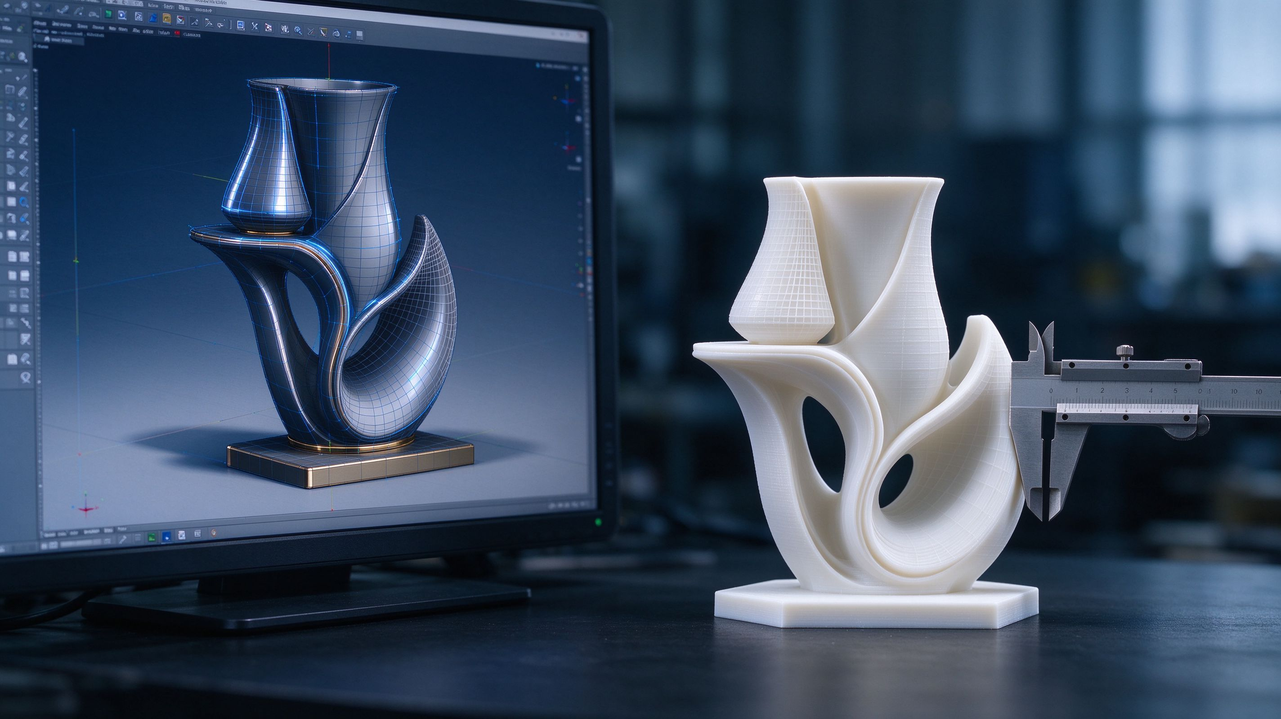
Ningbo, Zhejiang Nov 10, 2026 (Issuewire.com) - Developing a private label product in China involves much more than finding a factory and placing an order. A successful project usually requires product design, prototyping, engineering review, tooling, quality control, packaging, and production management.
For brands developing lifestyle products such as kitchenware, home storage, or personal care products, understanding the development process before production begins can help reduce design changes, tooling risks, quality problems, and delays.
So, what does the typical OEM/ODM product development process look like?
1. Define the Product Concept and Market Requirements
Every successful custom product starts with a clear product concept.
Before contacting suppliers, buyers should define the intended market, target customer, product function, approximate price range, materials, dimensions, and appearance. Market requirements can also influence details such as product capacity, handle size, colors, finishes, and packaging.
For products intended for international markets, these requirements may differ from those of products designed for the domestic market. Ergonomics, for example, can affect the dimensions and grip design of kitchen tools, cleaning products, and other handheld consumer goods.
A clear product brief gives designers and engineers a practical starting point and reduces unnecessary revisions later in the development process.
2. Develop the Product Design and 3D Model
Once the concept is defined, the next step is to turn the idea into a manufacturable design.
Design teams may begin with sketches, reference products, physical samples, or digital renderings. These concepts can then be developed into detailed 3D models that define the product's dimensions, components, materials, and assembly structure.
At this stage, designers should consider both appearance and manufacturability.
For example, wall thickness, snap-fit structures, draft angles, component connections, and surface finishes can all affect how easily a product can be manufactured. A design that looks good on screen may still require significant modification before it can be produced efficiently.
For brands developing products for different markets, ergonomic adjustments may also be necessary. Handle dimensions, grip spans, button positions, and operating angles can be reviewed before physical prototypes are produced.
3. Build and Test Functional Prototypes
A digital model is not enough to determine whether a product will work as intended.
Functional prototyping allows buyers and engineering teams to evaluate dimensions, mechanical movement, grip, fit, appearance, and usability before investing in production tooling.
Depending on the product, prototypes can be produced using technologies such as 3D printing, selective laser sintering, vacuum casting, or CNC machining.
For some custom lifestyle products, functional prototypes can be developed within 7-10 days. The exact development time depends on the product structure and project requirements.
Physical testing is particularly important for variables that are difficult to evaluate digitally, such as tactile feel, surface texture, grip comfort, cosmetic appearance, and the interaction between different components.
Testing these details before tooling can prevent costly changes later.
4. Conduct a DFM and Tooling Review
Before a production mold is manufactured, the product design should go through a Design for Manufacturing (DFM) review.
DFM examines whether the design can be manufactured consistently and efficiently at production scale.
Typical considerations include:
Wall thickness and transitions
Draft angles
Injection flow
Gating locations
Cooling channels
Parting lines
Undercuts
Snap-fit tolerances
Component consolidation
For injection-molded products, these details can have a direct impact on tooling cost, production efficiency, product appearance, and dimensional consistency.
A DFM review is therefore more than a technical formality. It is an opportunity to identify potential manufacturing problems before steel is cut.
For example, simplifying unnecessary undercuts or combining components where appropriate can reduce tooling complexity and maintenance requirements.
5. Test the Mold and First Production Samples
After the product design and tooling have been approved, the mold can be manufactured and tested.
Initial trial runs allow engineers to evaluate factors such as mold temperature, injection pressure, cycle time, dimensional accuracy, and surface quality.
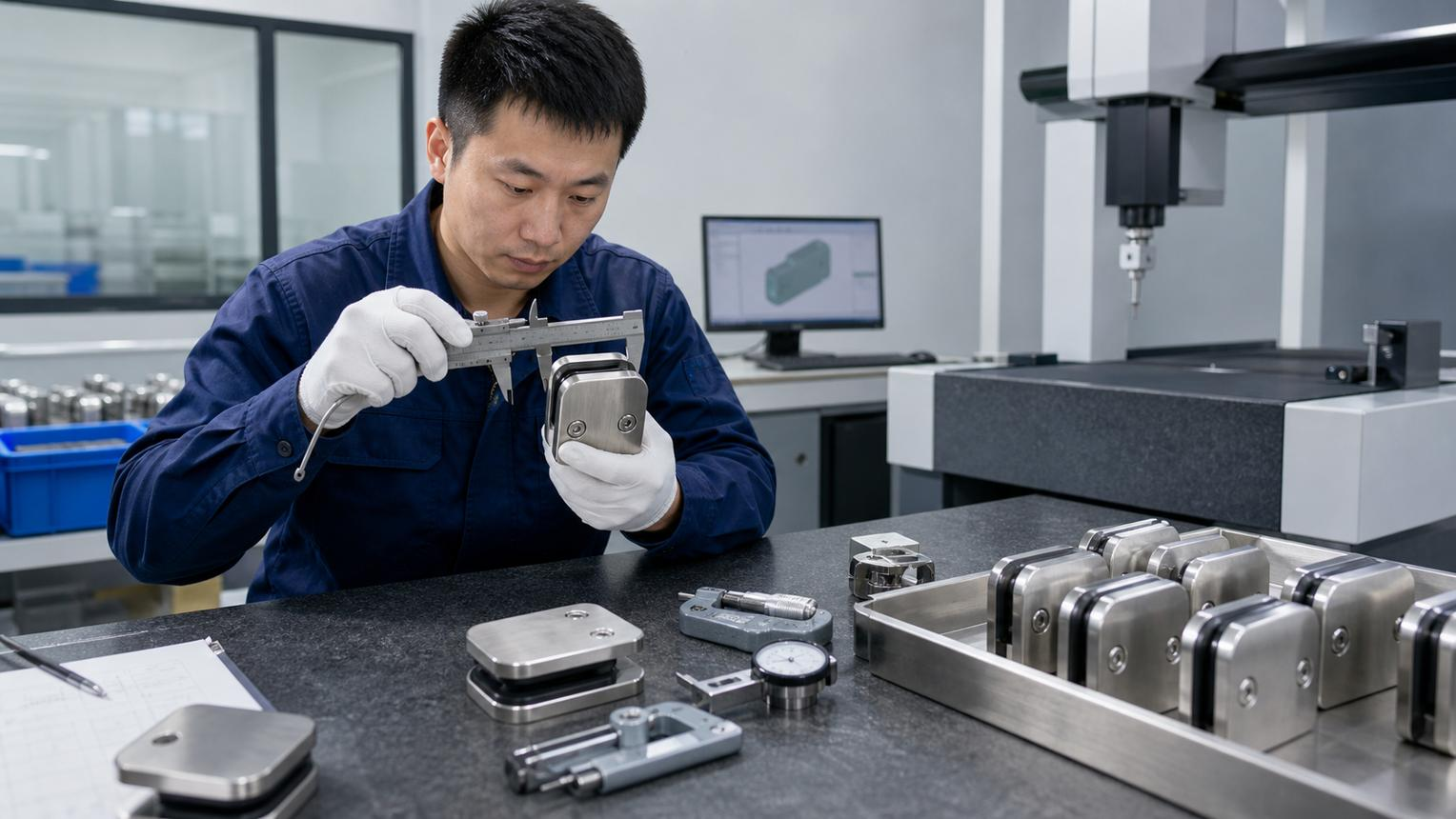
First-article inspections can then be used to compare production samples against approved engineering drawings and critical-to-quality dimensions.
If problems are discovered during these trials, adjustments can be made before the project moves into full-scale production.
This stage is especially important for private label products because a design may be approved visually while still having functional or dimensional issues that only become apparent during actual manufacturing.
6. Manage Mass Production and Quality Control
Once the tooling and samples have been approved, the project can move into mass production.
Quality control should not begin only when the finished goods are ready to ship. A structured process can include incoming quality control, during-production inspections, and final random inspections.
During production, inspectors can monitor product consistency while manufacturing is underway. This makes it possible to identify problems before an entire production run is completed.
Final inspections can evaluate factors such as:
Product dimensions
Appearance and finish
Functional performance
Drop resistance
Packaging condition
Quantity and labeling
For projects using AQL sampling, AQL Level II can be applied as part of the final random inspection process, with Major 2.5 and Minor 4.0 sampling levels used in the referenced production workflow.
The specific inspection requirements should always be agreed upon according to the buyer's product specifications and quality standards.
7. Develop Packaging and Compliance Documentation
Packaging should also be considered as part of product development rather than treated as an afterthought.
Private label products may require custom display boxes, inner trays, master cartons, labels, and other packaging components. Packaging should protect the product during transportation while also meeting the brand's retail requirements.
For products sold in international markets, buyers may also need relevant regulatory and compliance documentation.
Depending on the product and destination market, documentation may include requirements related to FDA 21 CFR, LFGB, CE, RoHS, or REACH. The applicable requirements depend on the product category and target market, so buyers should confirm them before production begins.
How Long Does Private Label Product Development Take?
The development timeline varies depending on product complexity, tooling requirements, testing, and production volume.
For some lifestyle products, functional prototypes can be developed within 7-10 days. A broader development roadmap may take around 90 days from initial concept through tooling and mass production, depending on the project.
The most important point is that product development should be treated as a series of stages rather than a single factory order.
Concept definition, design, prototyping, DFM, toolin, sample approval, quality control, and production each require their own review points.
What Is the Difference Between OEM and ODM?
OEM and ODM are both commonly used for private label product development, but they generally involve different starting points.
With OEM development, the buyer typically provides a more defined product concept, design, specifications, or existing product requirements, while the manufacturing partner helps turn those requirements into a production-ready product.
ODM generally involves greater support from the supplier or development partner in product design, engineering, and customization.
For brands without an internal product development team, an ODM partner can provide additional support during concept development and engineering. For brands with established designs, an OEM model may be more appropriate.
The right approach depends on how much of the product design and development the buyer wants to control internally.
What Should Buyers Check Before Mass Production?
Before approving mass production, buyers should confirm several key areas:
1. The final product dimensions and specifications
2. Prototype performance and functionality
3. Approved materials and finishes
4. Tooling and mold quality
5. Critical-to-quality dimensions
6. Packaging specifications
7. Required quality inspection standards
8. Applicable compliance documentation
A clear approval process helps prevent disagreements between buyers, designers, engineers, and manufacturers once production has started.
Working With an OEM/ODM Product Development Partner
Developing a custom private label product can require coordination between designers, engineers, tooling suppliers, manufacturers, quality inspectors, and packaging teams.
For companies that do not have these resources in-house, working with an experienced OEM/ODM development partner can simplify project management.
Union Source https://www.unionsourceb2b.com/, established in 2005, provides OEM and ODM product development services for lifestyle consumer goods, including kitchenware, home decor, personal care products, small appliances, festive supplies, party supplies, underwear, etc. Its development workflow includes product design, 3D modeling, functional prototyping, DFM review, tooling, production quality control, and packaging integration.
The company states that its development team includes industrial designers and tooling engineers, with functional prototypes available in 7-10 days for applicable projects and a broader production roadmap of approximately 90 days depending on project requirements.
For brands planning a custom product from concept through mass production, the key is not simply finding a factory. It is building a development process in which design, engineering, quality, tooling, and production are reviewed at the right stages.
Media Contact
Union Source Co., Ltd.
+86 13967800390
21F, NO. 288 Guanghua RD. Ningbo National Hi-Tech Zone, Ningbo, China 315048
Source :Union Source Co., Ltd.
This article was originally published by IssueWire. Read the original article here.
More News

‘The Perfect Lie’ Actor Matthijs Van De Sande Bakhuyzen To Lead AFM-Bound Arctic Thriller ‘The Art Of Survival’
EXCLUSIVE: Dutch star Matthijs van de Sande Bakhuyzen will headline The Art of Survival. Bakhuyzen’s recent credits include Netflix drama The Perfect Lie and MGM+’s Billy the Kid. In Bart Schrijver’s survival thriller, he will star as Daniel, a man taking part in a survival game show gone wrong. Embarking on a 50-day challenge in […]

ITV News & Guardian Closer To Publishing Sexual Misconduct Allegations About British Star After Injunction Appeal Deadline Passed
ITV News and The Guardian are preparing to publish potentially bombshell allegations about a British celebrity following a legal battle over their investigation. Last week, the man lost his bid for an injunction against ITV News producer ITN and The Guardian to prevent the media outlets from publishing allegations of sexual misconduct. Now, a deadline […]

'Baffling but brilliant' post-apocalyptic novel The End of Everything wins Booker Prize
M John Harrison becomes the oldest ever winner of the prestigious literary award at the age of 81.

‘Chasing Summer’ Director Josephine Decker Says That ‘Filmmaking Is Lonelier Than Ever,’ So It’s Time to Build a Community
Josephine Decker has a plan. “I have this crescendoing dream of creating a residency for movies without scripts. That’s how I made my short ‘A Stable Marriage.’ We basically had one paragraph, and then we spent a whole day improvising together. It was so much fun and so refreshing,” she tells Variety. Decker has directed […]
Why ‘Godzilla Minus Zero’ is Rated R: It Has Nothing to Do with the Monster Violence
The new movie Godzilla Minus Zero is the first film in the Godzilla universe to ever receive an R-rating and […] The post Why ‘Godzilla Minus Zero’ is Rated R: It Has Nothing to Do with the Monster Violence appeared first on Just Jared - Celebrity News, Entertainment News & Photos.

John Cena reveals shocking plans for upcoming festive holidays
John Cena reveals shocking plans for upcoming festive holidays John Cena already knows what he will be doing for the festive season this year.The retired WWE legend turned actor has revealed he makes sure to box off time to spend with his family from mid-December until a few days into the New...

Producer Jemima Goldsmith Accuses Russell Brand Of “Violence, Coercive Control & Abuse”
Jemima Goldsmith, executive producer of movies including The Voice of Hind Rajab and The Bibi Files, has alleged that Russell Brand was abusive during their relationship. After Brand was sentenced to prison for more than 10 years for rape and sexual assault, Goldsmith (who also goes by Jemima Khan) accused Brand of “violence, coercive control […]

‘Artificial’ Star Andrew Garfield Recalls Believing OpenAI’s Sam Altman Was ‘Genuinely Great’ and Could Be ‘My Future Best Friend’
Andrew Garfield’s portrayal of Sam Altman in “Artificial” is less than flattering, but there was a time when the actor deeply admired the OpenAI co-founder and CEO. “The first time I saw Sam, he was testifying in front of Congress and he was saying incredibly righteous stuff,” Garfield said Monday night during a Q&A following […]

Kate Bosworth & Justin Long Spotted on Rare Public Outing As They Reach Five Years Together
Kate Bosworth and Justin Long have been together for five years now and they’re going strong as a couple! The […] The post Kate Bosworth & Justin Long Spotted on Rare Public Outing As They Reach Five Years Together appeared first on Just Jared - Celebrity News, Entertainment News & Photos.

Katy Perry Once Called Russell Brand ‘Very Controlling,’ Her Comments Resurface After His 10.5-Year Sentence
Comments Katy Perry made about her ex-husband Russell Brand are resurfacing in light of his sentencing. During a 2013 interview […] The post Katy Perry Once Called Russell Brand ‘Very Controlling,’ Her Comments Resurface After His 10.5-Year Sentence appeared first on Just Jared - Celebrity News, Entertainment News & Photos.

Eric Dane's daughter Billie pens emotional message on his first birthday since death
Eric Dane's daughter Billie pens emotional message on his first birthday since deathEric Dane is being remembered by his widow Rebecca Gayheart and daughter Billie on what would have been his 54th birthday.The Grey's Anatomy star passed away earlier this year after an intense battle with...
Amy Poehler Celebrates ‘Dig’ Premiere, Her First Live-Action TV Lead Since ‘Parks & Rec’
Amy Poehler and the cast of Peacock’s upcoming comedy series Dig are at the premiere! Amy was joined by co-stars […] The post Amy Poehler Celebrates ‘Dig’ Premiere, Her First Live-Action TV Lead Since ‘Parks & Rec’ appeared first on Just Jared - Celebrity News, Entertainment News & Photos.
Recommended
YOUR NEWS, OUR NETWORK.
Do you have Great News you want to tell the world?
Be it updates about your business or your community, you can make sure that it’s heard by submitting your story to our network reaching hundreds of news sites across 6 verticals.